Public note
Claude Code: A Strong Product Under a Real Trust Test
Claude Code is Anthropic's agentic coding assistant available across multiple interfaces, but a recent source-code exposure highlights the importance of operational maturity in addition to product strength.
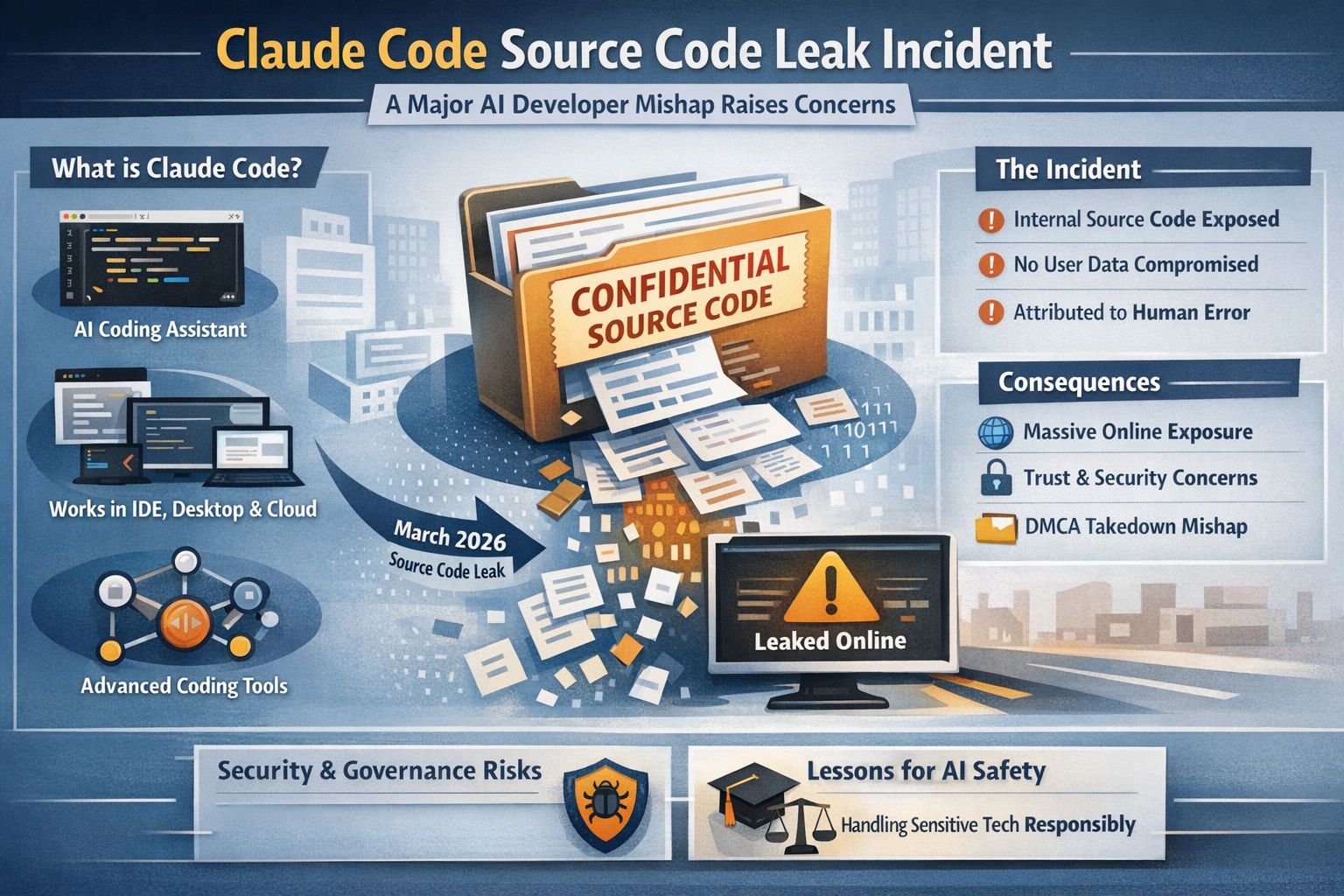
Summary
Claude Code is Anthropic’s agentic coding assistant: a tool that can read a codebase, edit files, run commands, work with Git, and automate development tasks through natural-language instructions. In practice, it is more than a terminal chatbot. Anthropic now positions Claude Code as a multi-surface product available in the terminal, IDEs, desktop, web, Slack, and CI/CD workflows.
But if this report has one central message, it is not simply that Claude Code is popular or powerful.
It is this:
Claude Code is one of the most important AI developer tools on the market — and that is exactly why its recent source-code exposure matters so much.
For people interested in IT, the key story is not just the leak itself. The bigger story is what the incident reveals about modern software trust, operational discipline, AI safety branding, and how fast leading AI products are being built and shipped.
What Claude Code Is
Anthropic’s official README describes Claude Code as “an agentic coding tool that lives in your terminal” and helps users execute routine tasks, explain complex code, and handle Git workflows through natural language. The official overview page expands that positioning: Claude Code can read codebases, edit files, run commands, integrate with development tools, and work across terminal, IDE, desktop app, and browser.
The current quickstart and overview docs also show that Claude Code is available across a surprisingly broad set of surfaces:
- terminal CLI
- web
- desktop app
- VS Code
- JetBrains IDEs
- Slack
- GitHub Actions
- GitLab CI/CD
That matters because it shows Claude Code is no longer a niche command-line utility. It is becoming a wider developer platform.
Anthropic’s documentation also highlights features such as:
- codebase understanding
- bug fixing and feature building
- Git integration for commits and pull requests
- MCP connections to tools like Google Drive, Jira, and Slack
- skills, hooks, and custom commands
- auto memory across sessions
- multiple coordinated agents
- cloud and web-based remote execution
This is why Claude Code is so widely watched: it sits near the center of the current shift from “AI code autocomplete” to “AI software agent.”
Why Claude Code Matters
Claude Code matters because it represents a new category of developer tool.
Older coding assistants mostly suggested code snippets. Claude Code is designed to do far more:
- inspect repositories
- make changes across multiple files
- run shell commands
- manage workflow state
- interact with outside tools
- create commits and PRs
- operate through multiple interfaces
For the broader IT audience, the easiest way to understand it is this:
Claude Code is trying to turn AI from a code suggestion engine into an active software coworker.
That is why its public traction is so strong. Anthropic’s GitHub organization page currently shows Claude Code at roughly 102k stars and 15.8k forks, making it one of the company’s most visible public developer products. The public releases page shows active iteration, with v2.1.90 published on April 1, 2026, including new features, bug fixes, and improvements around plugins, MCP behavior, performance, and agent handling.
So yes, Claude Code is very well known. But that is also why the source-code incident was not a minor embarrassment. It was a serious test of trust.
The Incident: Why the Leak Matters More Than the Gossip
In late March 2026, Anthropic accidentally exposed internal Claude Code source material through a public release packaging mistake. Multiple reports say the issue centered on a release that included a source map file, which in turn exposed access to a much larger internal code archive. Public reporting and Anthropic’s own comments indicate that the exposed material covered hundreds of thousands of lines of code and nearly 2,000 files. Anthropic stated that no sensitive customer data or credentials were involved and characterized the event as a human-error release packaging issue, not a breach.
That distinction is important, but it does not make the situation trivial.
From a risk and governance perspective, the event matters for at least four reasons.
1. It exposed product internals, not just a bug
This was not simply a broken build or a brief outage. Public reporting indicates the exposure revealed a substantial portion of Claude Code’s internal implementation, including product architecture and not-yet-shipped ideas. For a leading AI coding product, that means competitors, researchers, attackers, and curious users all got a deeper look at how the system is organized.
2. It challenged Anthropic’s safety-first image
Anthropic has long positioned itself as one of the AI labs most focused on safety, governance, and careful deployment. When a company with that identity accidentally exposes internal source material for one of its flagship products, the story becomes larger than a normal software mistake. It becomes a credibility issue.
That does not mean the company is uniquely reckless. It does mean the bar is higher.
3. It showed that AI trust is now operational, not just model-level
Much of the public conversation around AI safety still focuses on model behavior: hallucinations, misuse, jailbreaks, and dangerous capabilities. But the Claude Code incident is a reminder that release engineering, package hygiene, access control, and takedown handling are also part of AI safety in practice.
A company can build strong models and still damage trust through ordinary operational failures.
4. It intensified scrutiny of developer-tool supply chains
Public reporting also highlighted a messy aftermath: Anthropic issued takedown requests to GitHub, and TechCrunch reported that the initial notice ended up affecting thousands of repositories, including legitimate forks of Anthropic’s own public Claude Code repo. Anthropic later said this was accidental and retracted most of the notice. GitHub’s DMCA records show the company ultimately retracted the bulk of the takedown and narrowed it substantially.
That follow-up matters because it turned one incident into two:
- an accidental source exposure
- then an overbroad cleanup response
For IT readers, this is the real lesson: software governance is judged not only by the initial mistake, but also by the quality of the recovery.
What the Incident Does Not Mean
A good report should avoid overreaction.
The leak does not appear to mean:
- that Claude’s core models were exposed
- that customer data was leaked
- that credentials were compromised
- that Claude Code is unusable or broken as a product
Anthropic’s public statement, as quoted by multiple outlets, says no sensitive customer data or credentials were exposed. And the product itself continues to ship updates rapidly, with current releases reflecting ongoing development.
So the right interpretation is not “Claude Code is finished.”
The better interpretation is:
Claude Code remains a top-tier product, but the incident exposed a weak point in Anthropic’s operational maturity.
That is a more balanced and more useful conclusion.
Why the Leak Changes the Meaning of the Product
Before the incident, Claude Code was easy to describe as a premium AI coding agent with broad platform reach and strong workflow ambition.
After the incident, it also has to be understood as a case study in AI product governance.
That changes the report in three ways.
Product strength now has to be evaluated alongside operational discipline
Claude Code still looks powerful. Anthropic’s docs highlight agent teams, auto memory, MCP integrations, hooks, skills, cloud execution, and strong Git/IDE support. But after the exposure, users and enterprises have stronger reasons to ask questions like:
- How are releases packaged and reviewed?
- How are artifacts audited before shipping?
- How fast can problematic packages be revoked?
- How precise is the company’s incident response?
- How much trust should customers place in the surrounding operational system?
The product’s roadmap has become part of the security conversation
Public reporting said the exposed material gave outsiders a view into unreleased functionality and future direction. Even when no customer data is involved, roadmap visibility can still matter commercially and strategically.
In other words, the leak was not just about “code.” It was also about future product posture.
Trust now depends on what Anthropic does next
In situations like this, the long-term judgment is rarely made in the first 24 hours. It depends on what follows:
- packaging hardening
- release validation
- cleaner takedown procedures
- better communication
- stronger separation between public and internal artifacts
If Anthropic responds with real process improvements, Claude Code may ultimately emerge stronger. If not, the incident will linger as a warning sign.
Strengths That Still Matter
Even with the incident, Claude Code remains impressive for several reasons.
1. Product breadth
Few AI coding products are spread across as many surfaces: terminal, desktop, browser, IDEs, Slack, and CI/CD.
2. Workflow depth
Anthropic’s docs show that Claude Code is not just about single-file edits. It is built for debugging, testing, PR generation, automation, MCP tool use, and multi-agent workflows.
3. Rapid release cadence
The releases page shows continuous iteration, which suggests Anthropic is actively improving the product rather than letting it stagnate.
4. Extensibility
Claude Code supports skills, hooks, MCP integrations, and custom workflows, making it more like a platform than a closed assistant.
These strengths are real. The leak does not erase them.
The Main Caveat
The biggest caveat is simple:
Claude Code is now a trust-sensitive product.
That does not mean users should avoid it automatically. It does mean that teams, especially enterprise users, should think about Claude Code not only as a feature-rich coding assistant, but also as part of a broader operational system that must be evaluated for reliability, packaging discipline, and incident response quality.
That is especially true because Anthropic’s own current README now notes that npm installation is deprecated, while recommending native installers, Homebrew, PowerShell, or WinGet. Whether or not that change is directly tied to the incident, it underscores that distribution method and update path are part of the security story now.
Conclusion
Claude Code remains one of the most important AI coding tools in the market.
Its official docs and repo show a product that is broad, ambitious, and still shipping quickly: terminal-first at its core, but increasingly present across desktop, browser, IDEs, Slack, and CI/CD. It clearly deserves its reputation as a leading AI developer product.
But the recent source-code exposure changed the meaning of the project.
The key takeaway is not simply that “a leak happened.”
It is this:
Claude Code is now a test case for whether a leading AI company can match product ambition with operational maturity.
That is the real IT story.
If Anthropic tightens release controls, sharpens incident handling, and restores confidence, Claude Code may still be remembered mainly as a category-defining product that survived an embarrassing operational failure. If not, the incident will stand as a reminder that the hardest part of AI safety is sometimes not the model — it is the software process around it.
Sources
- Anthropic GitHub repo for Claude Code
- Claude Code official documentation and overview pages
- Claude Code quickstart and web documentation
- GitHub releases page for Claude Code
- Public reporting from The Verge, Axios, TechCrunch, and GitHub’s DMCA transparency repository